Leeds United isn’t just a football club—it’s a legacy carved in passion, grit, and unforgettable triumphs. From glorious European nights to dramatic promotions, their story captivates fans worldwide.
1. The Origins and Evolution of Leeds United

Founded in 1919, Leeds United emerged from the ashes of Leeds City FC, banned for financial misconduct during World War I. The Football League granted the city a new franchise, and thus, Leeds United was born. Over the decades, the club has evolved from regional contenders to global football icons, with a rich tapestry of history that continues to inspire.
Founding and Early Years (1919–1945)
In their early years, Leeds United struggled to gain consistent traction in the Football League. They were elected to the Second Division in 1920 and spent much of the 1920s and 1930s oscillating between divisions. Despite a lack of silverware, the club built a loyal fanbase at Elland Road, which would later become one of English football’s most iconic stadiums.
- Leeds United officially formed on October 17, 1919.
- First competitive match: 1–0 win over Port Vale in 1920.
- Reached the FA Cup semi-finals in 1926, their first major breakthrough.
Though success was slow to arrive, these formative years laid the foundation for future glory. The club’s identity began to take shape—resilient, hard-working, and deeply connected to the city of Leeds.
Rise to Prominence in the Post-War Era
After World War II, Leeds United began to show signs of progress. Under managers like Major Frank Buckley and later Raich Carter, the club developed a more structured approach to the game. The 1950s saw Leeds flirt with promotion to the First Division, but inconsistency plagued their campaigns.
It wasn’t until the appointment of Don Revie in 1961 that the club’s trajectory changed forever. However, the post-war years were crucial in shaping the club’s culture and expectations. Fans began to believe that Leeds could compete with the best, a belief that would soon be realized.
Elland Road: The Heart of Leeds United
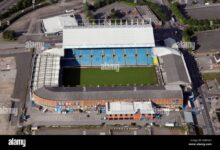
Elland Road has been the spiritual home of Leeds United since 1919. Located in the Beeston area of south Leeds, the stadium has undergone numerous renovations and expansions. Today, it boasts a capacity of over 37,000, making it one of the largest club grounds in England.
- First match at Elland Road: Leeds United vs. Hull City, 1919.
- Hosted matches during the 1966 FIFA World Cup.
- Designated as an all-seater stadium after the Taylor Report in the 1990s.
“Elland Road isn’t just a stadium—it’s where legends are made and dreams come alive.” — Leeds United supporter
The roar of the crowd, the iconic South Stand, and the electric atmosphere on matchday make Elland Road a fortress and a symbol of the club’s enduring spirit.
2. The Don Revie Era: Glory and Transformation
No chapter in Leeds United’s history is more revered than the Don Revie era. Appointed player-manager in 1961, Revie transformed a struggling Second Division side into one of England’s most dominant teams. His tactical acumen, man-management, and long-term vision redefined what Leeds United could achieve.
Building a Winning Culture
Revie instilled discipline, professionalism, and a relentless work ethic. He emphasized fitness, teamwork, and tactical intelligence—qualities that were ahead of their time. He also introduced innovative training methods and nutritional guidance, setting new standards in English football.
- Introduced double training sessions to improve fitness.
- Implemented strict lifestyle codes for players.
- Fostered a strong team identity rooted in unity and resilience.
These changes paid off quickly. Leeds earned promotion to the First Division in 1964, marking the beginning of a golden age.
Domestic Dominance in the 1960s and 1970s
Once in the top flight, Leeds United became a powerhouse. They won their first league title in 1969, finishing five points ahead of Liverpool. This triumph was followed by another in 1974, cementing their status as one of England’s elite clubs.
- First Division titles: 1968–69, 1973–74.
- FA Cup: 1972 (defeated Arsenal 1–0).
- League Cup: 1968 (first major trophy).
- Inter-Cities Fairs Cup: 1968, 1971.
Under Revie, Leeds played a brand of football that was both effective and controversial. Their physical, no-nonsense style earned them respect—and criticism. Nicknamed “Dirty Leeds” by rivals, they were feared for their intensity and tactical aggression.
Iconic Players of the Revie Era
The success of the Revie years was driven by a core of legendary players. These men became household names and remain icons in the Leeds United pantheon.
- Billy Bremner: Captain, midfield dynamo, and embodiment of the club’s fighting spirit.
- Johnny Giles: Creative engine, known for his vision and passing range.
- Norm Hunter: Rock-solid defender and vice-captain.
- Peter Lorimer: Fiery striker with a thunderous shot.
- Jack Charlton: Towering center-back and England World Cup winner.
Together, they formed a team that was greater than the sum of its parts—a true dynasty in the making.
3. European Adventures and Near Misses
While Leeds United dominated domestically, their European campaigns added drama, heartbreak, and glory. The club’s ventures into continental competition showcased their quality but also exposed the fine margins between triumph and tragedy.
Inter-Cities Fairs Cup Triumphs
Before the UEFA Cup existed, the Inter-Cities Fairs Cup was the premier European competition for city-based teams. Leeds United won it twice—first in 1968, defeating Ferencváros, and again in 1971, overcoming Juventus in a two-legged final.
- 1968: Beat Ferencváros 1–0 on aggregate.
- 1971: Defeated Juventus 3–3 on away goals after a 2–2 draw in Turin and 1–1 at Elland Road.
- These victories marked Leeds as a force on the European stage.
The 1971 win was particularly significant—it was the first time an English club had beaten Juventus in Italy. The achievement elevated Leeds’ reputation across Europe.
1975 European Cup Final: The Dark Night in Paris
The pinnacle—and heartbreak—of Leeds United’s European journey came in 1975. Under manager Brian Clough (briefly) and then Jimmy Armfield, Leeds reached the European Cup final against Bayern Munich at Parc des Princes in Paris.
What followed was one of the most controversial matches in football history. Leeds dominated possession and created numerous chances, but Bayern won 2–0 amid allegations of biased refereeing and poor officiating.
- Two Bayern goals came from disputed circumstances.
- Leeds players and fans felt robbed of a historic victory.
- The match is still remembered with bitterness by supporters.
“We were the best team on the pitch. We deserved to win. It was a disgrace.” — Billy Bremner
The aftermath saw a decline in the club’s fortunes, both on and off the pitch. The loss marked the end of an era and the beginning of a turbulent period.
UEFA Cup and Later European Campaigns
After the 1975 final, Leeds United’s European appearances became sporadic. They reached the UEFA Cup semi-finals in 1999–2000 under David O’Leary, defeating Lazio and Deportivo La Coruña en route.
- 2000 UEFA Cup run: Beat Galatasaray, Lazio, and Deportivo.
- Lost to eventual winners Galatasaray in the semi-finals.
- Mark Viduka, Harry Kewell, and Alan Smith were key figures.
This campaign reignited European dreams, but financial mismanagement soon derailed progress. Still, it remains one of the most exciting chapters in modern Leeds United history.
4. The Decline and Relegation: A Fall from Grace
After the glory of the 1970s, Leeds United entered a period of decline that would last decades. Mismanagement, financial recklessness, and a failure to adapt led to one of the most dramatic falls in English football history.
Post-Revie Instability and Leadership Vacuum
When Don Revie left in 1974 to manage England, he left behind a void no one could fill. Successive managers failed to maintain the club’s standards. Brian Clough’s 44-day tenure in 1974 is infamous—his confrontational style alienated players, and he was sacked almost immediately.
- Clough’s reign: 6 wins, 1 draw, 3 losses in 10 games.
- Jimmy Armfield took over but couldn’t sustain success.
- By the late 1970s, Leeds were relegated from the First Division.
The club struggled to regain its footing, bouncing between divisions throughout the 1980s.
Financial Crisis and Administration
In the late 1990s and early 2000s, Leeds United made a remarkable return to the Premier League and European football. But behind the scenes, reckless spending on transfers and wages created a financial time bomb.
Under chairman Peter Ridsdale, the club borrowed heavily against future revenues, betting on Champions League qualification. When they failed to qualify consistently, the debts became unsustainable.
- Debt peaked at over £100 million.
- Key players like Rio Ferdinand, Alan Smith, and Robbie Keane were sold to raise funds.
- In 2004, Leeds entered administration and were docked 15 points.
The punishment led to relegation to the Championship, and eventually, in 2007, to League One—the third tier of English football—for the first time in their history.
Rebuilding from the Third Tier
Relegation to League One was a humbling experience. But it also sparked a grassroots revival. Fans rallied behind the club, and new ownership under GFH Capital and later Massimo Cellino began a slow rebuild.
- 2007–2010: Focused on youth development and financial stability.
- 2010: Promoted back to the Championship under Simon Grayson.
- 2014: Ended playoff drought with a final appearance (lost to Derby County).
The journey was painful, but it reconnected the club with its roots and set the stage for a new era of hope.
5. The Marcelo Bielsa Revolution: Modern Resurgence
If the Don Revie era defined Leeds United’s past, the Marcelo Bielsa era reignited its future. Appointed in 2018, the Argentine manager brought a revolutionary philosophy that transformed the club both on and off the pitch.
Bielsa’s Philosophy: Gegenpressing and Total Football
Bielsa, known as “El Loco” for his intense methods, implemented a high-pressing, attacking style that thrilled fans and baffled opponents. His approach emphasized fitness, discipline, and relentless aggression.
- Players ran an average of 120+ km per match—more than any other team.
- Introduced video analysis, opposition scouting, and meticulous preparation.
- Instilled a culture of accountability and total commitment.
Though results were mixed initially, the team’s identity became clear: fearless, attacking, and uncompromising.
2019–2020: The Promotion Season That Captivated the World
After missing promotion in 2019 via the playoffs, Leeds United returned stronger in 2019–2020. They led the Championship for most of the season and secured automatic promotion with 93 points.
- Key players: Kalvin Phillips, Patrick Bamford, Liam Cooper, and Jack Harrison.
- Won the EFL Championship title, ending a 16-year Premier League exile.
- Bielsa hailed as a genius; fans called him a savior.
“He didn’t just change the team—he changed the soul of the club.” — Leeds United fan
The promotion was celebrated across Yorkshire and beyond, marking one of the most emotional comebacks in football history.
Impact Beyond the Pitch
Bielsa’s influence extended beyond tactics. He earned respect for his sportsmanship, such as ordering his team to allow a goal against Aston Villa in 2019 after a player was injured. The gesture went viral and enhanced Leeds’ global image.
- Became a cultural icon, featured in documentaries and media worldwide.
- Boosted merchandise sales and global fan engagement.
- Set a new standard for managerial integrity in modern football.
Though he left in 2022 after relegation, Bielsa’s legacy endures as a beacon of innovation and passion.
6. Leeds United in the Premier League: Challenges and Identity
Returning to the Premier League in 2020 was a dream come true. But the reality of top-flight football presented new challenges. Leeds United had to adapt quickly to survive against wealthier, more experienced clubs.
2020–2021: A Promising Return
In their first season back, Leeds finished 9th—remarkable for a newly promoted side. They played an open, attacking style that earned plaudits from fans and pundits alike.
- Defeated top teams like Manchester United and West Ham.
- Patrick Bamford won the EFL Championship Golden Boot and adapted well.
- Elland Road’s atmosphere returned with full force.
The season proved that Leeds could compete—but sustainability remained a question.
2021–2022: Struggles and Relegation
The second season was tougher. Injuries, defensive frailties, and a lack of squad depth took their toll. Despite Bielsa’s efforts, Leeds finished 18th and were relegated.
- Key issues: High defensive line exposed, lack of rotation.
- Bielasa resigned after the season ended.
- Relegation sparked debates about long-term strategy.
The fall was painful, but it highlighted the gap between Championship dominance and Premier League survival.
Post-Bielsa Era and New Management
After Bielsa, Leeds appointed Jesse Marsch, then later hired Daniel Farke in 2023. The club has focused on rebuilding with a more balanced approach, blending attacking intent with defensive stability.
- Marsch brought American-influenced tactics but was sacked after one season.
- Farke, known for his work at Norwich, aims for a sustainable promotion model.
- Investment in youth and data analytics has increased.
The journey continues, with Leeds striving to return to the Premier League with smarter, long-term planning.
7. The Culture and Fanbase of Leeds United
Leeds United’s identity is inseparable from its fans. Known for their passion, loyalty, and vocal support, the fanbase has weathered decades of highs and lows, remaining the club’s beating heart.
The Leeds United Supporters’ Trust (LUST)
LUST has played a vital role in safeguarding the club’s future. Formed during the financial crisis, the trust advocated for transparency, fan ownership, and ethical governance.
- Helped prevent asset stripping during administration.
- Continues to represent fan interests in club decisions.
- Runs community programs and educational initiatives.
Their work exemplifies the power of collective action in modern football.
Chants, Traditions, and Matchday Culture
From “Marching On Together” to “We Are Leeds,” the club’s anthems unite fans across generations. Elland Road erupts with song, color, and emotion on matchdays.
- “Marching On Together” is sung before every game.
- Fans organize tifos and displays for big matches.
- The South Stand is known for its non-stop support.
These traditions reinforce a sense of belonging and pride.
Global Reach and Digital Community
Leeds United has a growing international fanbase, with supporters’ clubs in the USA, Australia, and across Europe. Social media and streaming have expanded their reach.
- Official club channels have millions of followers.
- Fan podcasts and YouTube channels thrive globally.
- Merchandise sales have surged in recent years.
The club’s story—of resilience, rebellion, and revival—resonates far beyond Yorkshire.
8. Rivalries and Derby Days
Rivalries define football, and Leeds United has several intense ones. These matches are more than games—they’re battles for pride, history, and regional supremacy.
Leeds vs. Manchester United: The Roses Derby
Though not geographically close, the rivalry with Manchester United is fueled by historical competition, especially during the Revie era. Matches are charged with tension and significance.
- Leeds’ 1968 League Cup final win over United is legendary.
- Clashes in the 1970s were fiercely contested.
- Recent meetings have reignited interest.
While not a traditional derby, the fixture carries emotional weight.
Leeds vs. Chelsea: The Boring Derby?
The rivalry with Chelsea stems from the 1970 FA Cup final, where Chelsea won 2–1 after a replay. The match was marred by controversy and violence, creating lasting animosity.
- 1970 final: Played in heavy rain, criticized for poor quality.
- Leeds fans still feel aggrieved by refereeing decisions.
- Matches in the 2000s and 2020s have kept the rivalry alive.
Though less intense today, it remains a fixture with historical baggage.
Local Rivalries: Yorkshire Derbies
Leeds’ true local rivals are Yorkshire clubs like Sheffield United, Sheffield Wednesday, and Huddersfield Town.
- Sheffield derbies are especially heated.
- Huddersfield matches are known as the West Yorkshire derby.
- These games often have playoff or promotion implications.
Local bragging rights make these fixtures unmissable for fans.
9. Leeds United’s Youth Academy and Player Development
Leeds United has a proud tradition of nurturing young talent. The club’s academy, based at Thorp Arch, has produced stars who’ve gone on to achieve greatness.
Thorp Arch: The Training Ground of Champions
Opened in 2000, Thorp Arch is one of the most advanced training facilities in England. It houses first-team and academy setups under one roof.
- State-of-the-art gyms, pitches, and recovery centers.
- Emphasis on holistic player development—technical, tactical, mental.
- Used by England youth teams for camps.
The facility reflects Leeds’ commitment to long-term growth.
Graduates Who Made It Big
Many players have risen from the academy to first-team stardom or successful careers elsewhere.
- Harry Kewell: Australian international, played in World Cup and Champions League.
- Alan Smith: England international, later played for Manchester United.
- Carl Rimmer: Professional rugby player, rare cross-sport success.
- Sam Byram: Premier League defender, sold to West Ham.
- Jack Harrison: Developed at Leeds, now in MLS with NYCFC.
The academy remains a vital pipeline for talent.
Investment in Youth Under New Ownership
Current owner Andrea Radrizzani has prioritized youth development. The club has increased funding for scouting and coaching at grassroots levels.
- Partnerships with local schools and clubs.
- Data-driven recruitment strategies.
- Focus on producing homegrown players for the first team.
The goal is sustainable success through internal growth.
10. The Future of Leeds United: Ambitions and Challenges
Leeds United stands at a crossroads. With a passionate fanbase, a world-class stadium, and a rich history, the club has all the ingredients for future success—but challenges remain.
Ownership and Financial Stability
Andrea Radrizzani sold a majority stake to 49ers Enterprises in 2023, bringing American investment and NFL-style professionalism. The partnership aims for stability and growth.
- 49ers Enterprises also owns NFL’s San Francisco 49ers.
- Focus on commercial revenue, global branding, and analytics.
- Long-term goal: Sustainable Premier League presence.
The new ownership model could be transformative—if executed wisely.
Stadium and Infrastructure Development
Elland Road has potential for expansion. Discussions about increasing capacity or redeveloping stands have surfaced periodically.
- Potential to add 10,000+ seats with redevelopment.
- Modernizing facilities to match top Premier League standards.
- Challenges include planning permissions and funding.
Investing in infrastructure is key to long-term competitiveness.
On-Pitch Strategy and Managerial Vision
With Daniel Farke in charge, Leeds are adopting a more pragmatic approach. The focus is on controlled possession, defensive solidity, and smart recruitment.
- Less reliance on high press, more tactical flexibility.
- Targeting undervalued players with high potential.
- Building a squad capable of sustained Championship success.
The aim is not just promotion, but survival and stability in the top flight.
What is Leeds United’s most successful era?
The Don Revie era (1961–1974) is widely regarded as Leeds United’s most successful. During this period, the club won two First Division titles, an FA Cup, a League Cup, and two Inter-Cities Fairs Cups. The team became known for its discipline, tactical innovation, and star players like Billy Bremner and Jack Charlton.
When did Leeds United last win promotion to the Premier League?
Leeds United won promotion to the Premier League in 2020 after finishing first in the EFL Championship under manager Marcelo Bielsa. It ended a 16-year absence from the top flight of English football.
Who owns Leeds United as of 2024?
As of 2024, Leeds United is majority-owned by 49ers Enterprises, the investment arm of the NFL’s San Francisco 49ers. Andrea Radrizzani, who owned the club from 2017, retains a minority stake.
Why is Marcelo Bielsa so revered by Leeds fans?
Marcelo Bielsa is revered for transforming Leeds United’s playing style, leading them to promotion in 2020, and restoring pride in the club. His intense work ethic, tactical genius, and sportsmanship—such as his gesture against Aston Villa—earned him legendary status among fans.
What are Leeds United’s main rivalries?
Leeds United’s main rivalries include matches against Yorkshire clubs like Sheffield United, Sheffield Wednesday, and Huddersfield Town. They also have a historic rivalry with Manchester United and a contentious one with Chelsea, stemming from the 1970 FA Cup final.
Leeds United’s journey is one of the most compelling in football history. From the glory days under Don Revie to the modern revival led by Marcelo Bielsa, the club has experienced triumph, tragedy, and redemption. Their passionate fanbase, iconic home at Elland Road, and commitment to attacking football define their identity. While challenges remain, the future holds promise. With smart ownership, strong youth development, and a clear vision, Leeds United continues to march on—together.
Further Reading:
